
Candlelit croquet and an octagonal ballroom
Under Grier and Julia Hersh, Springdale was a center of York's social life: some forty rooms, a ballroom that seemed octagonal, an orchestra that played until the last dancer left, and croquet by candlelight.
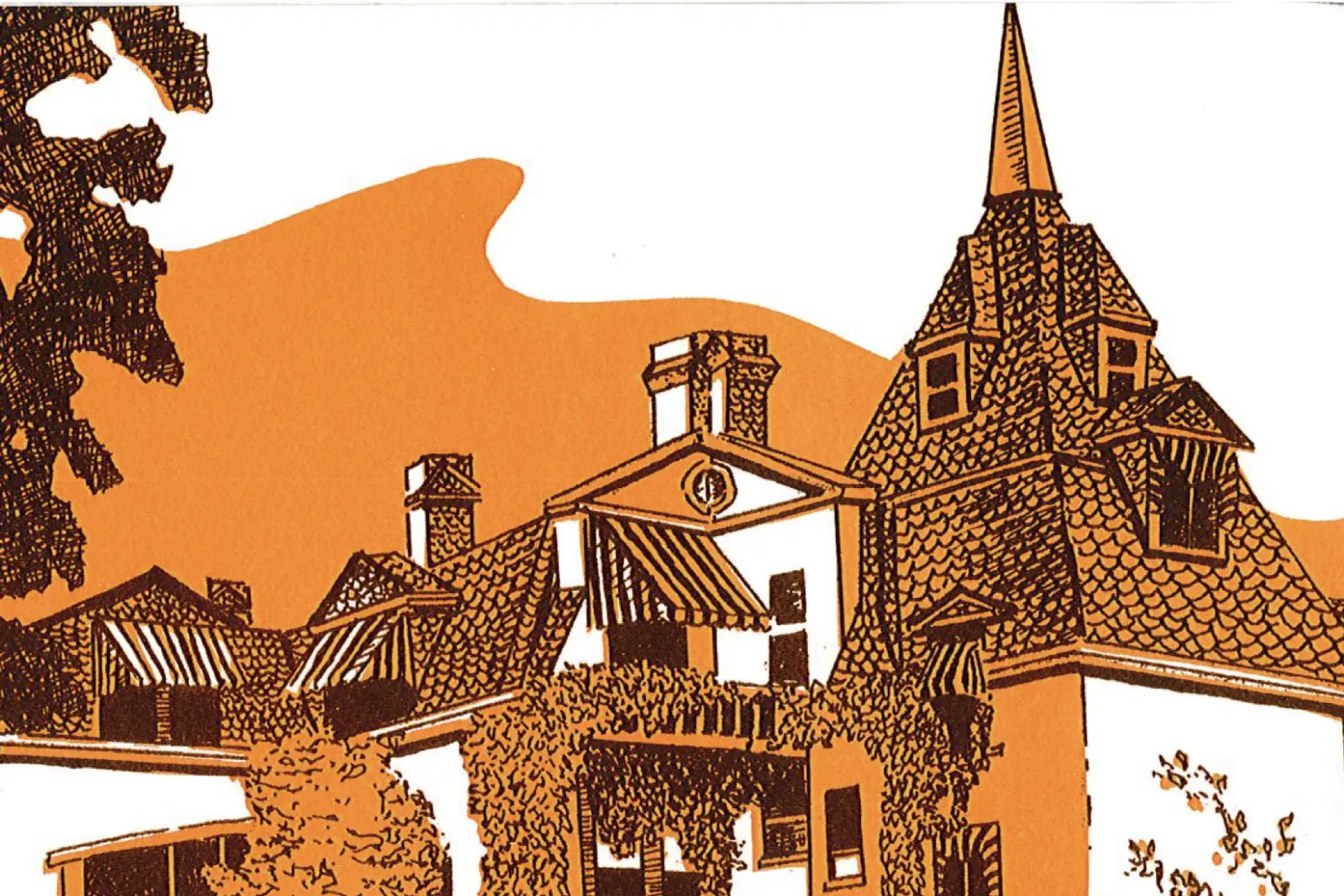
Grier Hersh married Julia Mayer, daughter of the York attorney John L. Mayer, in 1887 at St. John’s Episcopal Church on North Beaver Street. The newspapers called it “the most brilliant that has taken place in many a day.” A choir was brought in from Reading, and Hersh chartered a special train to carry the couple to Baltimore to begin their honeymoon.
The house they came home to was brick covered in stucco, with about forty rooms: a large ballroom to the east, a billiard room, an extremely large library, living rooms upstairs and down, a sewing room, a nursery, wine cellars, servants’ quarters in the south wing, and a dining room paneled in a soft red wood around an elaborately carved fireplace of pinkish stone. From the center hall a wide staircase rose on easy steps to a gallery.
The ballroom lay below the reception hall, down wide steps from the entrance, and those steps made a natural stage for guests in costume to make an entrance. Four large windows at each corner made the room seem octagonal. Their leaded panes were “birdseye” glass, each with a bubble blown into it. The piano stood to one side, and on party nights a row of chairs ringed the floor.
One local historian described the life of the place. On many evenings, formally dressed guests drove up in carriages for dances in the octagonal ballroom, or for musicales and theatricals, indoors or in a natural amphitheater on the grounds. Formal gardens lay to the east. In winter the choicest plants came indoors, to a porch enclosed in glass as a conservatory. On the north lawn were the croquet grounds, where play could go on after dark by the light of candles fixed to the wickets. It was always said that an orchestra at Springdale never stopped playing, however late, until the last dancer left the floor.
In 1945, four years after Grier Hersh’s death, his estate sold the property to Charles Pechenek, who remodeled the carriage house into a home for himself. In 1954 he demolished the mansion. The carriage house still stands, beside the sanctuary of the Unitarian Universalist Congregation of York on South George Street.